
Services
SEO
Search Engine Optimization (SEO) is the process of enhancing a website’s presence on search engines such as Google, allowing businesses to connect with their audience through organic search results. In a highly competitive online environment, having a website alone is not sufficient — it must be properly optimized to appear when users search for relevant products or services.
SEO combines multiple strategies to improve performance and visibility. This includes researching the right keywords to understand user intent, optimizing on-page elements like titles, meta descriptions, and content, and implementing technical improvements to ensure the website loads quickly, works well on mobile devices, and is easily accessible for search engine crawlers. Off-page efforts, such as earning quality backlinks, also play a key role in building trust and authority.
An effective SEO approach does more than just increase website traffic. It improves overall user experience, strengthens brand reputation, and supports consistent, long-term growth. Unlike paid promotions, SEO focuses on attracting genuinely interested visitors who are more likely to engage and convert. By regularly monitoring performance, staying updated with algorithm changes, and refining strategies, SEO helps businesses remain competitive and maintain a strong digital presence over time.
SEM
Search Engine Marketing (SEM) is a powerful digital marketing strategy used to increase a website’s visibility on search engines through paid advertising. Unlike SEO, which focuses on organic growth, SEM involves running targeted ads that appear at the top of search engine results pages (SERPs), helping businesses reach potential customers instantly.
SEM primarily works through platforms like Google Ads, where advertisers bid on specific keywords related to their products or services. When users search for those keywords, the ads are displayed, and businesses pay only when someone clicks on them, making it a cost-effective pay-per-click (PPC) model. This allows companies to control their budget, target specific audiences, and measure results accurately.
One of the key advantages of SEM is its ability to deliver immediate traffic and quick results. It also offers advanced targeting options, including location, demographics, device type, and user behavior, ensuring ads reach the right audience at the right time. Additionally, SEM campaigns can be optimized continuously by analyzing performance data, improving click-through rates (CTR), and maximizing return on investment (ROI).
Overall, SEM is an essential tool for businesses looking to boost online visibility, generate leads, and achieve measurable growth in a competitive digital landscape.


GRAPHIC DESIGN
Graphic design is a powerful form of visual communication that blends creativity with strategy to deliver ideas, messages, and brand identity effectively. It uses elements like typography, colors, images, and layouts to create content that is both visually appealing and meaningful. In today’s competitive digital environment, graphic design plays a crucial role in capturing attention, building trust, and improving user experience across platforms such as websites, social media, advertisements, and print media. A well-designed piece not only looks attractive but also communicates the intended message clearly to the target audience.
Beyond aesthetics, graphic design supports branding and marketing by ensuring consistency and strengthening brand recognition. Designers carefully study business goals, audience preferences, and current trends to produce impactful visuals that stand out. From logos and brochures to social media graphics and videos, every design contributes to shaping a brand’s identity. To remain relevant, designers continuously adapt to new tools, technologies, and evolving trends while maintaining quality, originality, and clarity in their work. This field also requires strong problem-solving skills, collaboration, and attention to detail to ensure each design meets its purpose and delivers measurable results for businesses in a fast-changing digital landscape today while keeping communication simple, engaging, and effective for audiences.
SMM
SMM (Social Media Marketing) is a powerful digital marketing strategy that focuses on using social media platforms to promote brands, products, and services while building strong relationships with target audiences. In today’s fast-paced online environment, platforms like Facebook, Instagram, LinkedIn, and Twitter play a crucial role in shaping brand visibility and customer engagement.
SMM involves creating and sharing high-quality content such as posts, images, videos, and stories that capture attention and encourage interaction. It also includes paid advertising campaigns that help businesses reach a wider and more specific audience based on demographics, interests, and behavior. One of the key benefits of SMM is its ability to provide real-time communication with customers, allowing brands to respond quickly, build trust, and improve customer satisfaction. Additionally, performance can be measured through analytics, helping marketers track engagement, reach, conversions, and overall effectiveness.
A successful SMM strategy requires consistency, creativity, and a clear understanding of the audience. By combining organic content with strategic advertising, businesses can increase brand awareness, drive website traffic, and generate leads, making SMM an essential tool for sustainable business growth.
EMAIL MARKETING
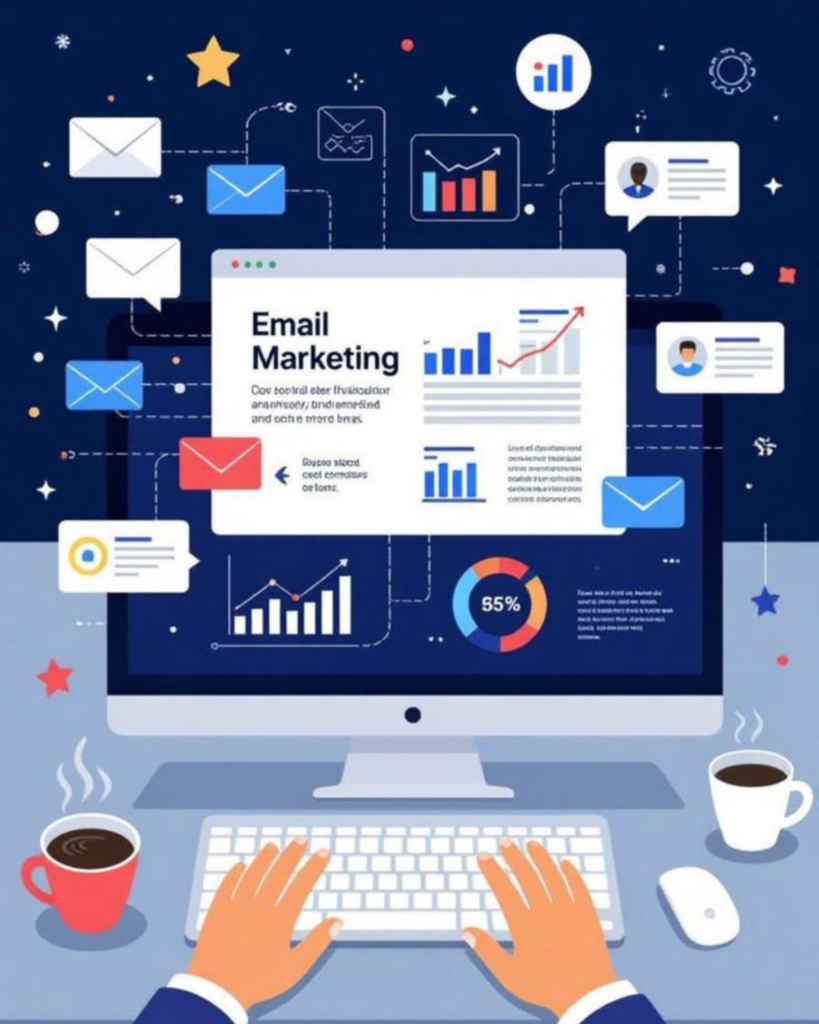
Email marketing is a powerful digital marketing strategy that involves sending targeted messages to a group of people through email to promote products, services, or build relationships with customers. It remains one of the most cost-effective and direct forms of communication, allowing businesses to reach their audience in a personalized and measurable way.A successful email marketing campaign begins with building a quality email list, consisting of people who have shown genuine interest in a brand. Marketers then create engaging content such as newsletters, promotional offers, product updates, or informative messages that provide value to the reader. Personalization plays a key role, as emails tailored to user preferences and behavior tend to achieve higher open and click-through rates.
Email marketing also supports automation, enabling businesses to send welcome emails, follow-ups, reminders, and abandoned cart messages without manual effort. This helps improve customer engagement and conversion rates over time. Additionally, performance can be tracked using metrics like open rate, click rate, and conversion rate, allowing continuous improvement of campaigns. Overall, email marketing is an essential tool for building long-term customer relationships, increasing brand awareness, and driving consistent business growth in a competitive digital landscape.
CONTENT MARKETING
Content marketing is a modern marketing strategy that focuses on producing and sharing meaningful, relevant, and consistent content to attract a specific group of people. Rather than directly selling products or services, it aims to build trust, inform audiences, and create a strong brand identity over time. This approach allows businesses to connect with their audience in a more genuine way, helping to build lasting relationships and customer loyalty.
This strategy uses different types of content such as blog articles, videos, social media posts, infographics, podcasts, and email campaigns. Each type of content is carefully created to educate, entertain, or solve problems for the audience, while gently encouraging them to take action.
To succeed in content marketing, it is important to understand the target audience, including their interests, needs, and challenges. Creating high-quality content with proper keyword optimization helps improve search engine visibility. Maintaining consistency and a clear brand voice also plays a key role in achieving results.
Overall, content marketing helps increase website traffic, build trust, and improve conversion rates. By consistently offering valuable content, businesses can establish themselves as experts in their field and stay competitive in the digital world.
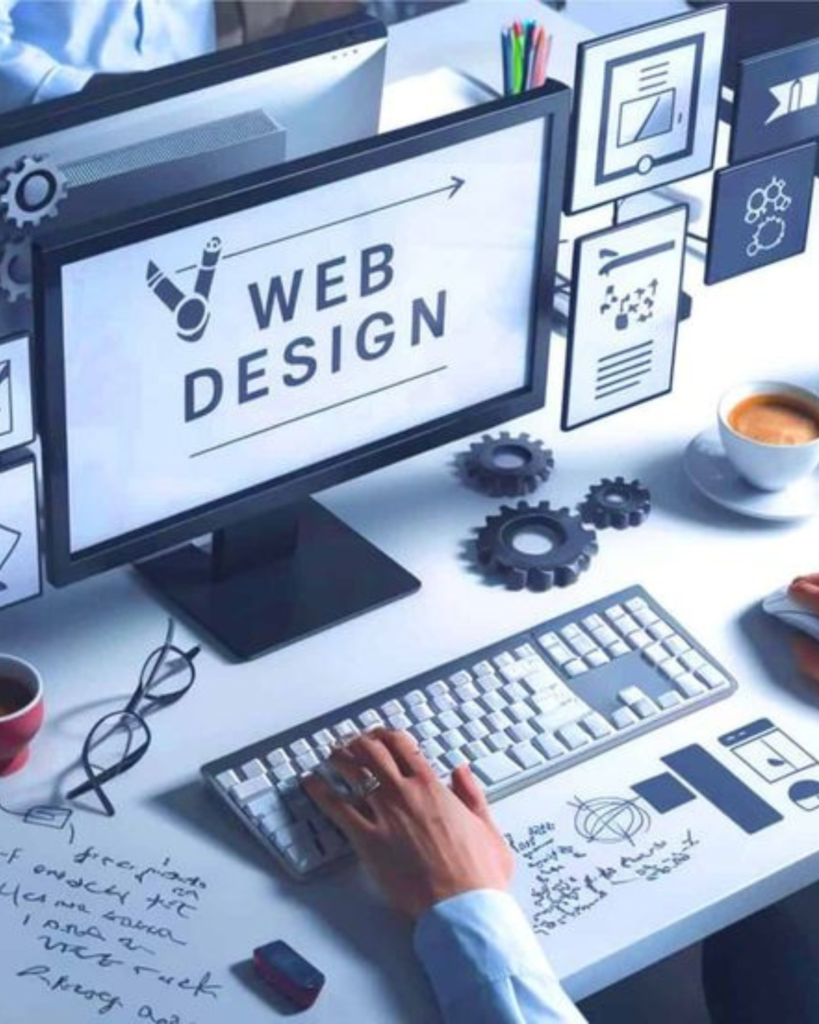
WEB DESIGN
Web design is the process of creating and organizing the visual layout, structure, and user experience of websites. It combines creativity and technical skills to build websites that are attractive, functional, and user-friendly. A well-designed website plays a crucial role in representing a brand online and influencing how users interact with it.
Web design involves several key elements, including layout, color schemes, typography, images, and navigation. Designers focus on creating a clean and visually appealing interface that guides users smoothly through the site. Responsive design is also essential, ensuring that websites work properly on different devices such as desktops, tablets, and smartphones. In addition to aesthetics, usability is a major aspect of web design. Designers aim to provide a seamless user experience by making content easy to read, buttons easy to click, and navigation simple to understand. Tools like HTML, CSS, and design software are commonly used to bring ideas to life.
Modern web design also considers factors like loading speed, accessibility, and search engine optimization (SEO). A fast, accessible, and optimized website can improve user satisfaction and increase visibility on search engines. Overall, web design is a vital part of digital presence, helping businesses connect with their audience effectively and professionally.
VIDEO EDITING
Video editing is the process of arranging, modifying, and enhancing video clips to create a complete and meaningful visual story. It combines creativity and technical skills to produce videos that are engaging, professional, and easy to understand. A well-edited video plays an important role in communicating ideas clearly and capturing the audience’s attention across digital platforms.
Video editing involves several key elements, including cutting and trimming clips, adding transitions, applying color correction, adjusting audio, and including visual effects. Editors focus on creating a smooth flow that keeps viewers interested from beginning to end. Proper timing, pacing, and synchronization of audio and visuals are essential to ensure a high-quality result. In addition to visuals, sound design, background music, and subtitles also contribute to improving the overall experience.
Modern video editing is done using advanced tools such as Adobe Premiere Pro, Final Cut Pro, and DaVinci Resolve, which help bring creative ideas to life efficiently. Editors also optimize videos for different platforms, ensuring compatibility with various screen sizes and formats.
Overall, video editing is a vital part of digital content creation, helping individuals and businesses present their message effectively and professionally.