Introduction to Marketing Evolution
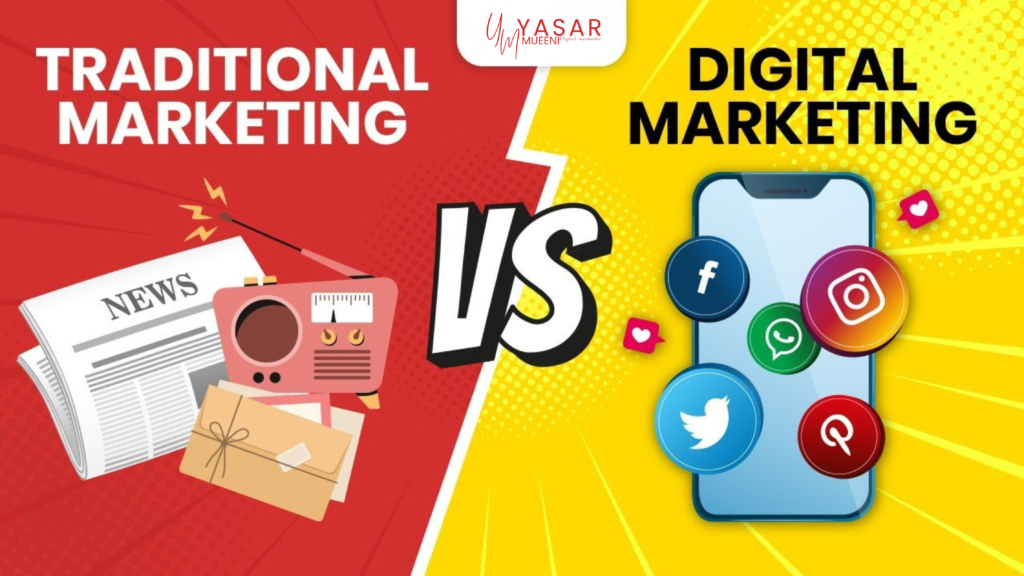
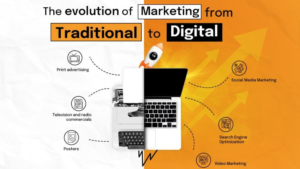
Marketing has evolved significantly over the years, shifting from traditional offline methods to modern digital platforms. Businesses today have more choices than ever to reach their audience effectively. While traditional marketing has been trusted for decades, digital marketing is rapidly transforming how brands communicate with customers. Understanding the differences between these two approaches helps businesses choose the right strategy for growth and success.
Key Points:
- Marketing connects businesses with customers.
- Technology has changed how marketing works.
- Both methods still have relevance today.
- The audience and goals will determine which approach is best.
What is Traditional Marketing?
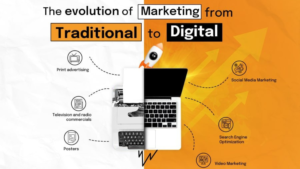
Traditional marketing refers to conventional methods of promoting products and services that existed before the internet era. These include print advertisements, television commercials, radio promotions, billboards, and direct mail campaigns. It focuses on reaching a broad audience without precise targeting.
Traditional marketing is often considered more tangible and trustworthy, especially among older generations who are more familiar with these formats. It creates strong brand recognition through repeated exposure in physical and broadcast media.
Key Points:
- Includes TV, radio, newspapers, magazines, and billboards.
- Targets a mass audience.
- Limited audience interaction.
- Harder to measure performance accurately.
What is Digital Marketing?
Digital marketing refers to the process of promoting products, services, or brands using various online platforms and digital technologies. In today’s technology-driven world, businesses rely heavily on digital channels to reach their target audience effectively and efficiently. This form of marketing includes a wide range of strategies such as social media marketing, search engine optimization (SEO), email marketing, content marketing, influencer marketing, and paid online advertising like Google Ads and social media ads.
One of the major advantages of digital marketing is its ability to precisely target specific audiences based on factors such as age, location, interests, behavior, and online activity. This helps businesses deliver personalized messages to the right people at the right time, increasing the chances of conversions and customer engagement. Additionally, digital marketing provides real-time performance tracking, allowing businesses to measure results instantly through analytics tools. Metrics like website traffic, click-through rates, conversion rates, and customer engagement can be easily monitored.
Another important feature of digital marketing is its flexibility. Businesses can quickly adjust their campaigns, modify content, or change strategies based on performance data and market trends. This adaptability makes digital marketing more efficient compared to traditional marketing methods. Moreover, it is cost-effective, making it suitable for small, medium, and large businesses alike, as it requires lower investment while delivering measurable results.
Digital marketing also encourages interactive and engaging communication between businesses and customers. Through social media platforms, blogs, videos, and emails, companies can directly interact with their audience, build relationships, and improve customer loyalty. It also allows brands to operate globally, reaching customers beyond geographical boundaries and expanding their market presence.
Key Points:
- Uses internet-based platforms and digital technologies for promotion.
- Enables highly targeted and personalized marketing campaigns.
- Offers real-time performance tracking and detailed analytics.
- Provides flexibility to modify and optimize strategies quickly.
- Cost-effective compared to traditional marketing methods.
- Encourages interactive and engaging communication with customers.
- Helps companies reach a worldwide audience without being restricted by geography.
Key Differences Between Digital and Traditional Marketing
- Reach and Audience Targeting
Although it lacks precision targeting, traditional marketing reaches a large audience. A TV ad, for example, is shown to many viewers regardless of their interest in the product. However, companies may target particular demographics, interests, and behaviors with digital marketing.
Key Points:
- Traditional: Mass audience approach.
- Digital: Highly targeted audience.
- Digital provides better personalization.
- Traditional is less flexible in audience selection.
2. Cost and Budget Efficiency
Traditional marketing methods are often expensive due to production and placement costs. TV commercials, newspaper ads, and billboards require significant investment. Digital marketing, on the other hand, can be much more affordable and scalable.
Small businesses especially benefit from digital marketing as they can start with a limited budget and gradually expand campaigns based on results.
Key Points:
- Traditional marketing is costly.
- Digital marketing offers budget control.
- Pay-per-click models reduce risk.
- Better ROI with digital campaigns.
3. Measurability and Analytics
One of the biggest advantages of digital marketing is the ability to measure results accurately. Businesses can track clicks, impressions, conversions, and customer behavior in real-time. Traditional marketing lacks this level of detailed analytics.
This makes digital marketing more data-driven and effective for decision-making.
Key Points:
- Digital provides real-time data.
- Traditional relies on estimates.
- Easy performance tracking online.
- Data helps improve strategies.
4. Customer Engagement and Interaction
Traditional marketing is mostly one-way communication where businesses deliver messages to consumers. Digital marketing enables two-way interaction, allowing customers to engage through comments, shares, likes, and feedback.
This interaction builds stronger relationships and improves customer loyalty.
Key Points:
- Traditional: One-way communication.
- Digital: Two-way interaction.
- Higher engagement in digital marketing.
- Builds stronger customer relationships.
5. Flexibility and Adaptability
Digital marketing campaigns can be modified instantly based on performance. If an ad is not performing well, it can be adjusted or stopped immediately. Traditional marketing campaigns are harder to change once launched.
This flexibility makes digital marketing more efficient and responsive to market trends.
Key Points:
- Digital campaigns are easily adjustable.
- Traditional campaigns are fixed.
- Faster response to market changes.
- Continuous optimization possible online.
Advantages of Traditional Marketing
Despite the rise of digital marketing, traditional marketing still holds value in many situations. It is especially effective for local businesses and audiences who prefer offline media.
Traditional marketing builds credibility and trust because people often perceive print and TV ads as more reliable.
Key Points:
- Strong local reach.
- High credibility and trust.
- Effective for older audiences.
- Tangible and memorable formats.
Advantages of Digital Marketing
Digital marketing offers numerous advantages that make it the preferred choice for modern businesses in today’s highly competitive and technology-driven environment. It enables precise audience targeting based on demographics, interests, behavior, and location, ensuring that marketing efforts reach the right people at the right time. This not only improves conversion rates but also minimizes wasted resources. Additionally, digital marketing is highly cost-efficient compared to traditional methods, making it accessible for both small startups and large enterprises.
Another major benefit is the ability to track and measure performance in real time using advanced analytics tools. Businesses can monitor campaign effectiveness, user engagement, and return on investment (ROI), allowing them to make data-driven decisions and continuously optimize their strategies. Furthermore, digital platforms allow brands to connect with a global audience and operate 24/7 without any geographical restrictions, creating endless growth opportunities. The interactive nature of digital marketing also helps build stronger relationships with customers through direct communication, feedback, and personalized experiences.
Key Points:
- Global reach with the ability to target international markets easily.
- Cost-effective campaigns suitable for all business sizes.
- Detailed analytics, performance tracking, and actionable insights.
- High engagement through social media, email, and interactive content.
- Real-time optimization and quick campaign adjustments.
- Personalized marketing for better customer experience.
- Increased brand visibility and online presence.
- Better conversion rates through targeted strategies.
Disadvantages of Traditional Marketing
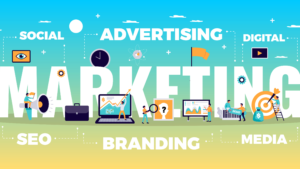
Traditional marketing has several limitations, especially in today’s fast-paced and technology-driven digital world. It often lacks flexibility and adaptability, making it difficult for businesses to respond quickly to changing market trends and customer preferences. Additionally, it tends to be more expensive compared to modern digital methods, as it involves costs like printing, broadcasting, and physical distribution. Another major drawback is that it does not allow businesses to accurately track customer behavior or engagement, making it harder to measure the overall effectiveness and success of campaigns. As a result, decision-making becomes less data-driven and more dependent on assumptions.
Key Points:
- High cost due to printing, media buying, and distribution expenses.
- Limited targeting compared to digital platforms, reducing audience precision.
- Difficult to measure ROI accurately due to lack of real-time analytics.
- Slow campaign adjustments, making it hard to respond quickly to market changes.
Disadvantages of Digital Marketing
Although digital marketing has many benefits, it also comes with challenges. It requires technical knowledge and constant updates to keep up with changing trends and algorithms.
There is also high competition, making it harder for businesses to stand out without a strong strategy.
Key Points:
- Requires technical skills.
- High competition.
- Constant updates needed.
- Risk of online reputation issues.
When to Use Traditional Marketing
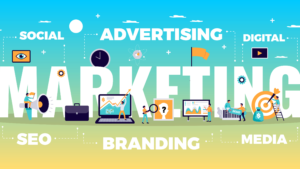
Traditional marketing is best suited for businesses targeting a local audience or older demographics. It is also effective for building brand awareness on a large scale through mass media.
For example, events, retail stores, and local services can benefit from offline promotions.
Key Points:
- Best for local campaigns.
- Suitable for older audiences.
- Effective for brand awareness.
- Works well in less digital regions.
When to Use Digital Marketing
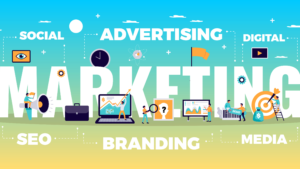
Digital marketing is ideal for businesses that want to reach a wider and more targeted audience. It is especially useful for startups, e-commerce businesses, and companies looking for measurable results.
It is also perfect for building long-term customer relationships through engagement and content.
Key Points:
- Best for global reach.
- Ideal for targeted campaigns.
- Suitable for online businesses.
- Enables long-term growth strategies.
Integrating Both Marketing Strategies
Instead of choosing one over the other, many businesses benefit from combining both digital and traditional marketing strategies. This integrated approach ensures maximum reach and effectiveness.
For example, a company can use traditional marketing to build brand awareness and digital marketing to engage customers and drive conversions.
Key Points:
- Combines strengths of both methods.
- Improves overall marketing effectiveness.
- Reaches both offline and online audiences.
- Creates a balanced strategy.
Future of Marketing
The future of marketing is increasingly digital, driven by advancements in technology, data analytics, and artificial intelligence. However, traditional marketing will not disappear completely, as it still plays a role in certain markets.
Businesses must adapt to changing trends and find the right balance between both approaches to stay competitive.
Key Points:
- Digital marketing will continue to grow.
- Technology will drive innovation.
- Traditional marketing will still exist.
- Integration will become more common.
Conclusion
Digital marketing and traditional marketing both have their own strengths and limitations. While traditional marketing offers credibility and broad reach, digital marketing provides precision, flexibility, and measurable results.
In today’s competitive environment, businesses should not rely on just one method. Instead, they should understand their audience, set clear goals, and choose the right mix of strategies to achieve success.
Key Points:
- Both methods are important.
- Choice depends on business goals.
- Digital marketing is more flexible and measurable.
- Combining both strategies gives the best results.